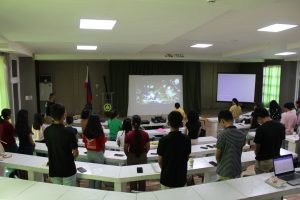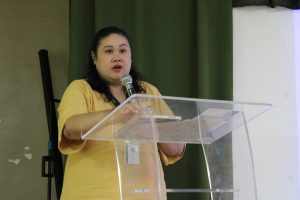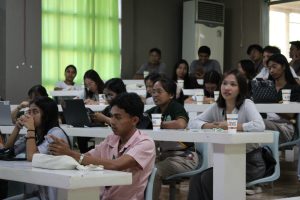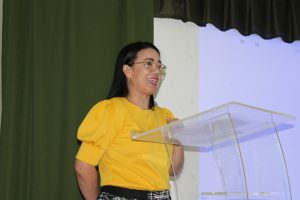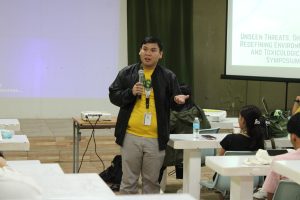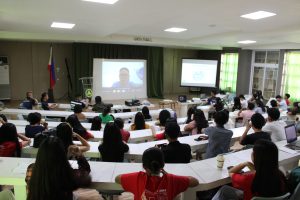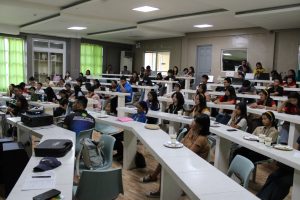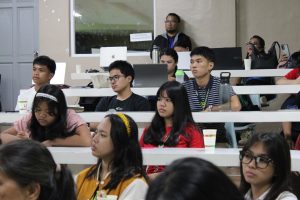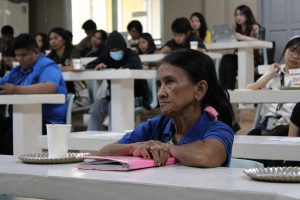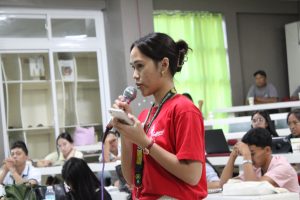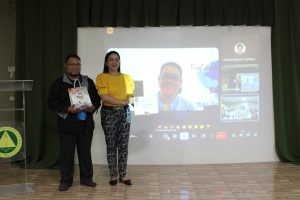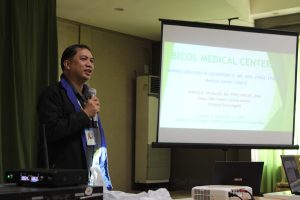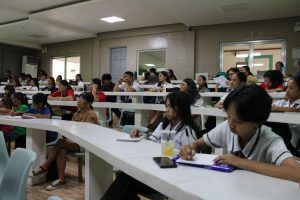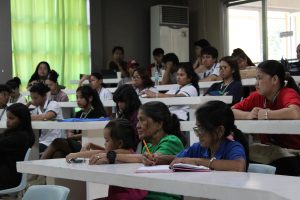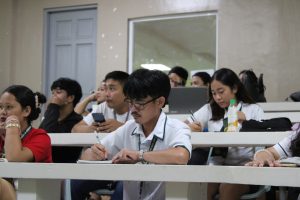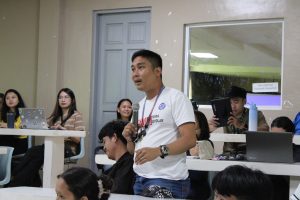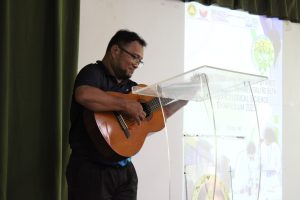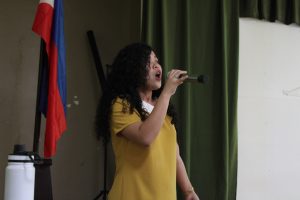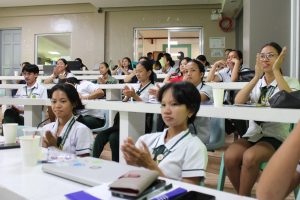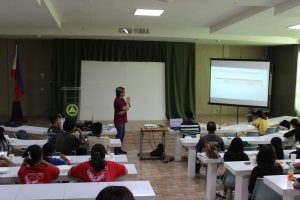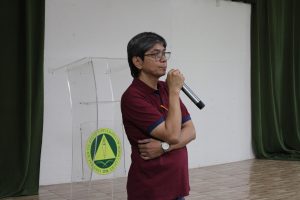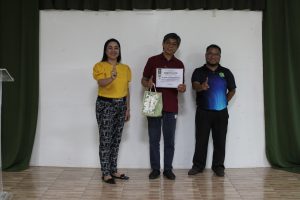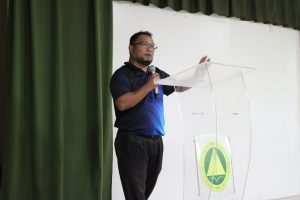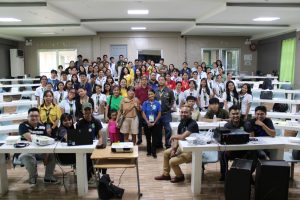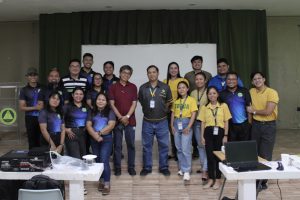

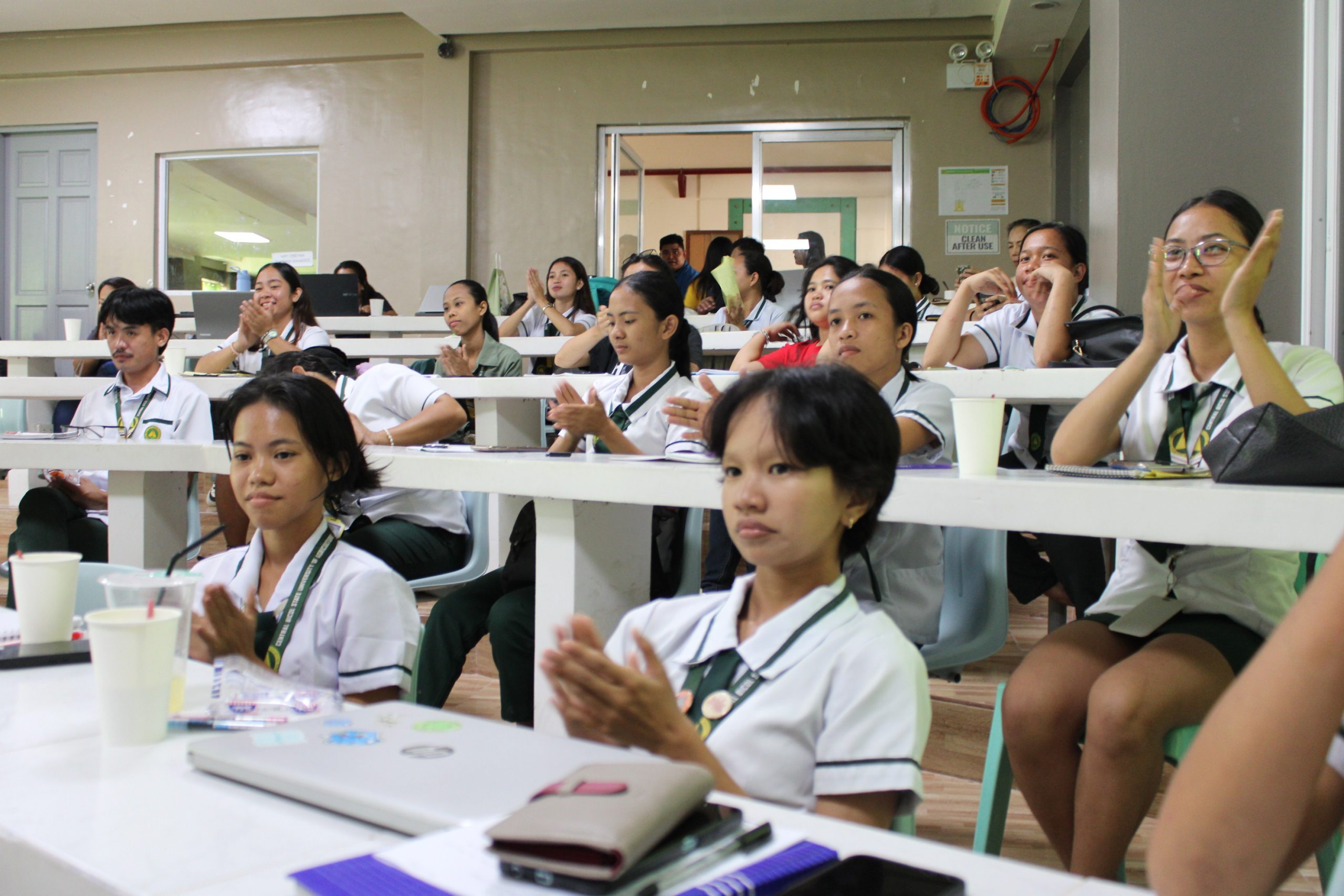
The Master of Science in Environmental Science (MS ES) students of the Central Bicol State University of Agriculture (CBSUA) successfully organized a forward-looking symposium titled “UNSEEN THREATS, SHARED FUTURES: Redefining Environmental Health and Toxicological Science 2025.” Held on December 10, 2025, the event brought together environmental professionals, medical experts, researchers, and students to examine urgent and emerging concerns in environmental health and toxicology.
At the core of the symposium, under the leadership of Environmental Health and Toxicology Professor Marilyn A. Siguenza, was a discussion on the invisible yet pervasive threats present in today’s environment, including chemical contaminants, pollutants, and other unseen toxic exposures that significantly affect public health. Throughout the program, emphasis was placed on shared responsibility, scientific progress, and community awareness as essential elements in building a safer and healthier future.
To deepen this discussion, the symposium featured three distinguished resource speakers who offered complementary perspectives on toxicological issues, bridging environmental science, laboratory analysis, and medical practice. Their presentations collectively highlighted how interdisciplinary approaches are crucial in understanding and addressing environmental health risks.
To begin the lecture series, Ma. Grace B. Bedis, Senior Environmental Management Specialist of the Department of Environment and Natural Resources Environmental Management Bureau Region V, delivered her talk titled “Environmental Toxins: Understanding Hidden Hazards.” She shed light on silent environmental toxins that are often overlooked in daily life, explaining how contaminants from industrial activities, improper waste disposal, and household sources accumulate in air, water, and soil. Moreover, she underscored the importance of monitoring, regulation, and public participation in reducing exposure, stressing that environmental toxins not only degrade ecosystems but also directly threaten human health.
Building on this environmental perspective, Engr. Reuben E. Espartinez Jr., RCHE, Chemist I and Drug Testing Analyst of the Bicol Medical Center, presented “Contaminants and Toxins: Pathways to Exposure.” He explained how harmful substances enter the human body through ingestion, inhalation, and dermal absorption. Through real-world case examples, he demonstrated how everyday practices and environmental conditions influence exposure risks. In addition, his presentation highlighted the vital role of laboratory analysis, surveillance systems, and risk assessment in identifying potential hazards, as well as the responsibility of chemists and health professionals in ensuring public safety.
Concluding the symposium’s expert discussions, Dr. Sebastian-Roberto Estrada, University Physician, delivered “Toxic Exposures and Health Risks: A Medical View.” He provided a clinical perspective on the effects of toxic substances on the human body, ranging from acute poisoning to chronic illnesses linked to long-term exposure. Furthermore, he emphasized the importance of early detection, accurate diagnosis, and community-level health education. By integrating environmental science with clinical practice, Dr. Estrada highlighted how multidisciplinary collaboration is essential in preventing toxic exposures and protecting public health.
Overall, the symposium strengthened participants’ understanding of the interconnected nature of environmental and human health. Through informed dialogue and shared expertise, the event reinforced the need for collective action in addressing unseen environmental threats and shaping a healthier and more sustainable future. 𝘙𝘦𝘱𝘰𝘳𝘵 𝘢𝘯𝘥 𝘱𝘩𝘰𝘵𝘰𝘴 𝘧𝘳𝘰𝘮 𝘑𝘰𝘴𝘦𝘱𝘩 𝘉𝘦𝘯𝘦𝘥𝘪𝘤𝘵 𝘌𝘴𝘱𝘪𝘳𝘪𝘵𝘶