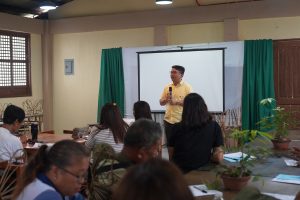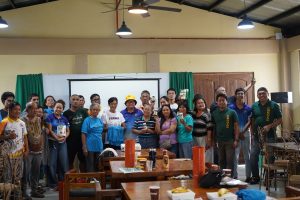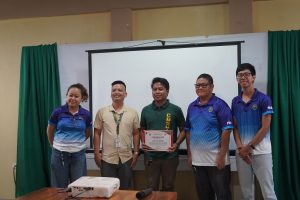

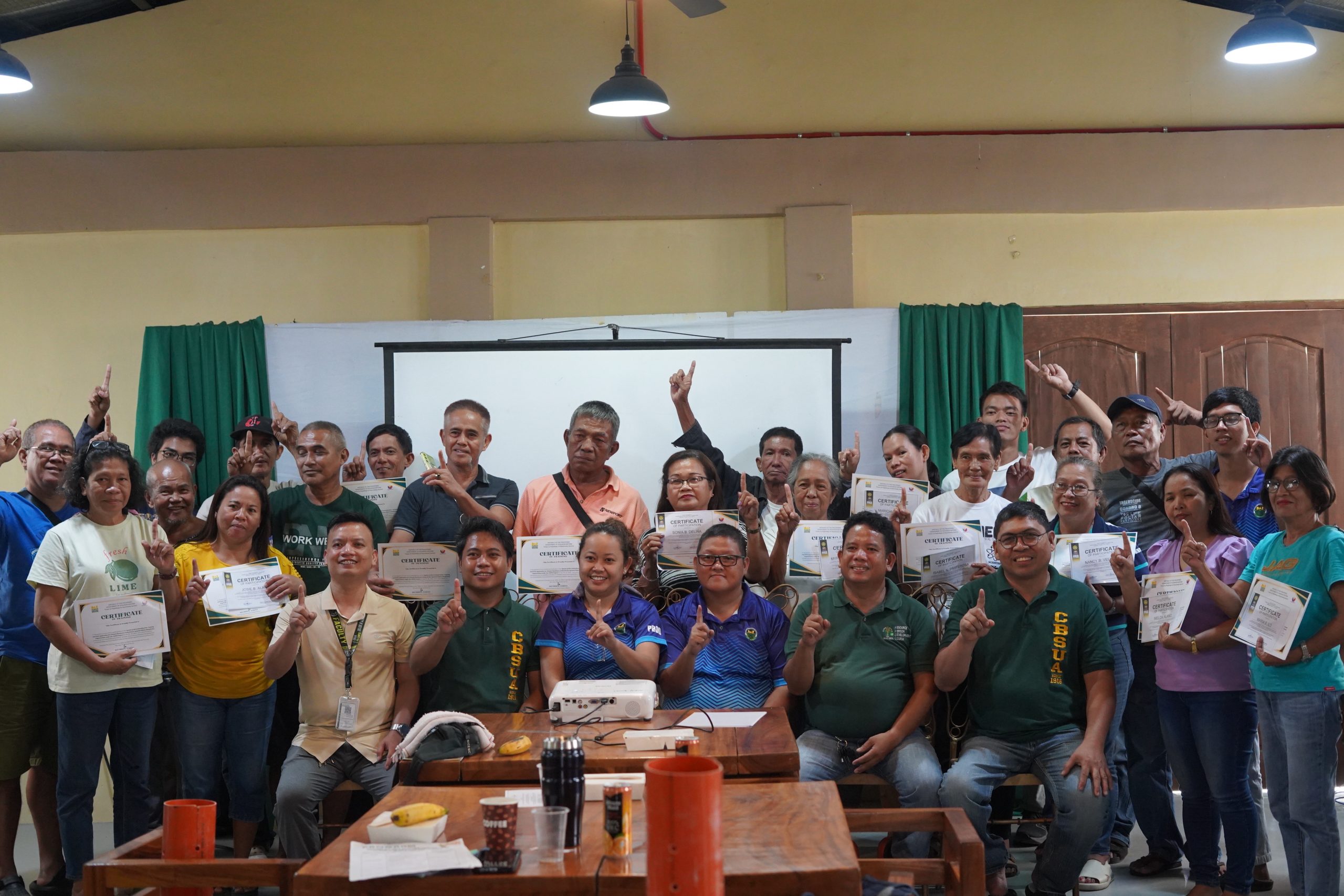
The Central Bicol State University of Agriculture (CBSUA), in partnership with the Department of Agrarian Reform (DAR) Provincial Office of Camarines Sur I, conducted a three-day System of Rice Intensification (SRI): Training on Field Application for Climate-Resilient Agriculture from July 20 to 22, 2026, at the Agriville Learning Hub and in Mataoroc, Minalabac, Camarines Sur.
The training gathered farmers and agricultural stakeholders to enhance their knowledge and skills in the System of Rice Intensification (SRI), a rice production approach that promotes higher yields while improving the efficient use of water, soil nutrients, and other farm resources. The activity was spearheaded by Joel S. Balindan, faculty member of the College of Agriculture and Natural Resources (CANR) and project proponent.
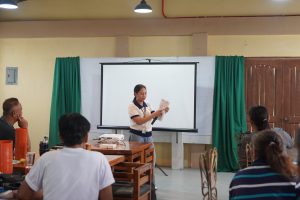
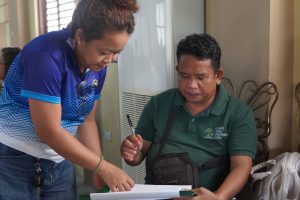
Participants attended lectures and field activities covering the status of SRI in the Philippines and the Bicol Region, rice morphology and growth stages, SRI principles and cultural management practices, and Agro-Ecosystem Analysis (AESA). They also conducted field observations and presented the results of their agro-ecosystem analyses.
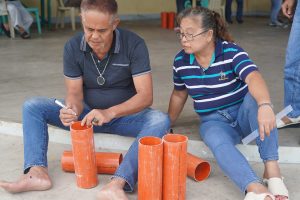
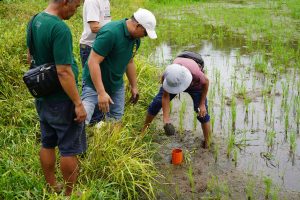
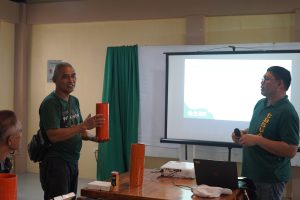
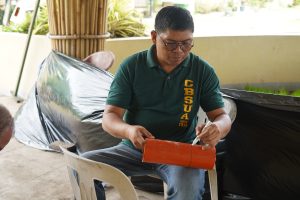
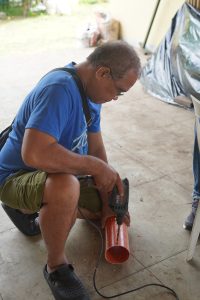
Hands-on sessions introduced participants to the preparation of organic fertilizers and soil nutrient enhancers, including Bokashi, organic concoctions, calcium phosphate, Fermented Amino Acid (FAA), Indigenous Microorganisms (IMO), and kuhol inoculant. The training concluded with demonstrations on seed soaking, transplanting, and water management using the Alternate Wetting and Drying (AWD) technology, including the installation of observation wells for monitoring water levels in rice fields.
Serving as resource persons were Carmelita Cervantes, Regional SRI Coordinator; Liezl G. Ayala; Leo J. Armea, SRI Technical Staff; and Julius L. De Villa, who facilitated the lecture and field demonstration sessions throughout the training.
The activity makes up the continuing partnership between CBSUA and DAR to promote sustainable rice production by equipping farmers with science-based technologies and field practices that support climate-resilient agriculture. | 𝘙𝘦𝘱𝘰𝘳𝘵 𝘢𝘯𝘥 𝘱𝘩𝘰𝘵𝘰𝘴 𝘧𝘳𝘰𝘮 𝘉𝘦𝘵𝘩𝘦 𝘔𝘢𝘦 𝘎. 𝘙𝘪𝘤𝘢𝘧𝘰𝘳𝘵