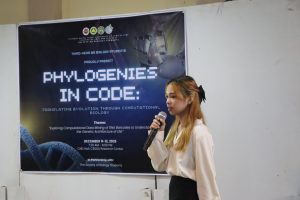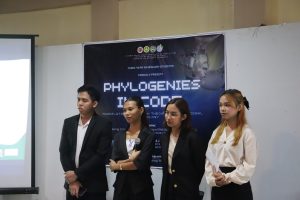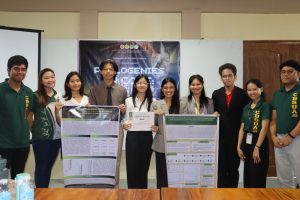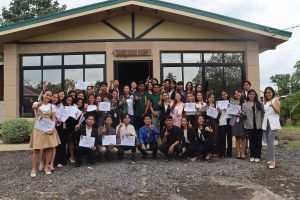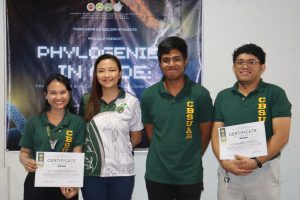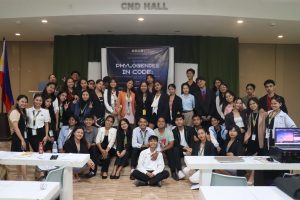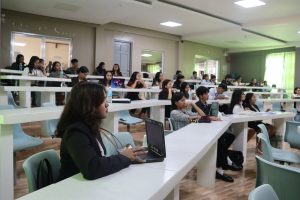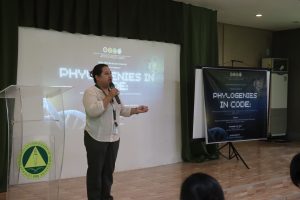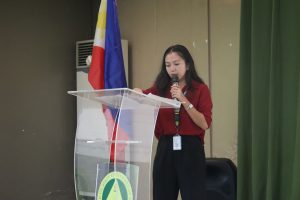

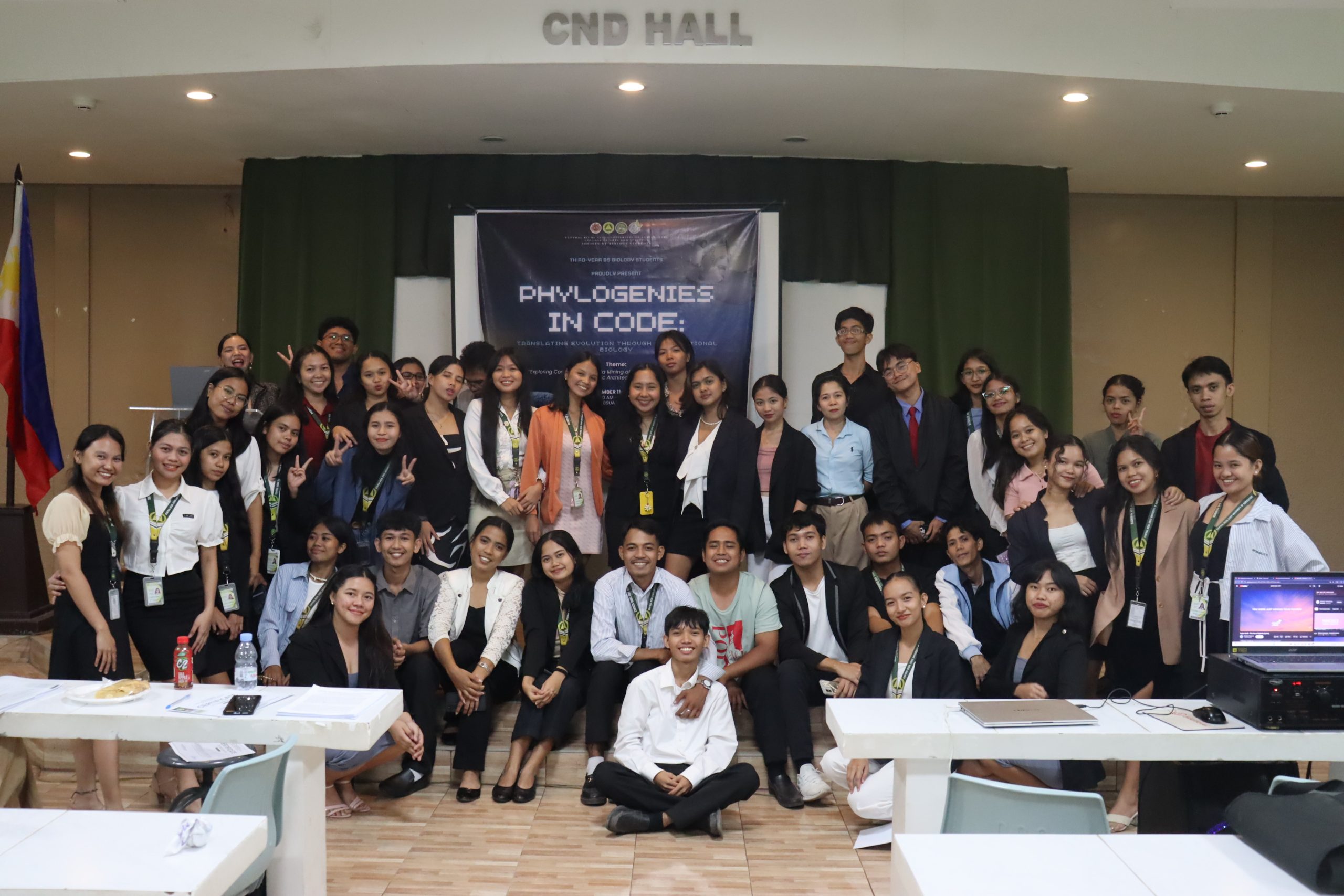
The Central Bicol State University of Agriculture (CBSUA) Pili Campus’ third-year Biology students successfully wrapped up their Culminating Activity in Cell and Molecular Biology (CMB) on December 11–12, 2025, held at the Agriville and Learning Hub and CND Hall.
The two-day academic event highlighted the students’ growing competence in bioinformatics, a rapidly advancing field in modern biological research. As part of the activity, students worked with the Molecular Evolutionary Genetics Analysis (MEGA) application to process genetic datasets, construct phylogenetic trees, and interpret evolutionary relationships among species.
The activity was formally opened with inspiring remarks from Ms. Imelda Corazon C. Camposano, MSc, Biology Department program chairperson, who underscored the value of research-driven learning. Guidance throughout the activity was provided by Mr. Andro Roy C. Camata, the CMB subject adviser, who explained the objectives of the culminating task and emphasized the importance of biological software in modern research. The event was also aligned with the academic vision of the College of Arts and Sciences, under the leadership of CAS Dean Ms. Katrina G. Gepilano, RN, MAN.
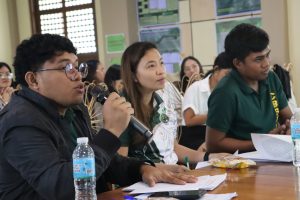
One of the major highlights of the activity was the rigorous final defense, during which students presented and defended their research outputs before a panel of evaluators composed of Christian C. Gratil, Jean Hugo Pontillas, Andro Roy Camata, Imelda Corazon C. Camposano, MSc, Zyla Avila, and Eljhun B. Lumapag.
Among the notable research presentations were “Odd One Out: Plesiomorphic Traits of Platypus (Ornithorhynchus anatinus) with Phylogenetic Analysis of 20 Class Reptilia Using ND1 and rRNA” by Section 3A, and “Phylogenetic Analysis of Fifteen Species from Three Cucurbitaceae Genera Using rbcL and matK Barcodes” by Section 3B.
The culminating activity underscored CBSUA’s continued commitment to nurturing future scientists who are proficient in bioinformatics and well-prepared to meet the evolving, global demands of biological research. 𝘐 𝘙𝘦𝘱𝘰𝘳𝘵 𝘢𝘯𝘥 𝘱𝘩𝘰𝘵𝘰𝘴 𝘧𝘳𝘰𝘮 𝘊𝘈𝘚 𝘉𝘪𝘰𝘭𝘰𝘨𝘺 𝘋𝘦𝘱𝘢𝘳𝘵𝘮𝘦𝘯𝘵