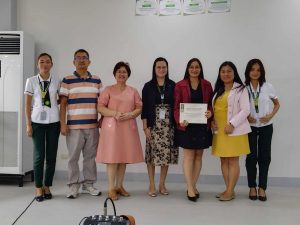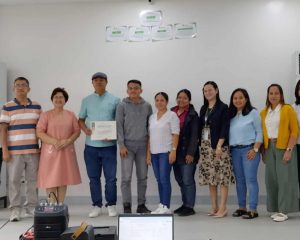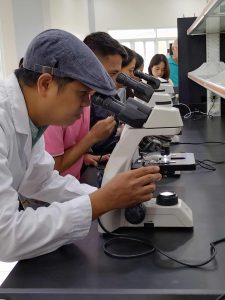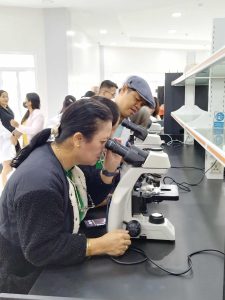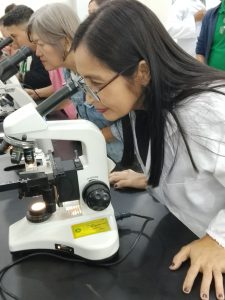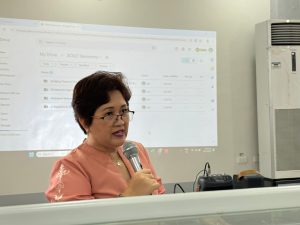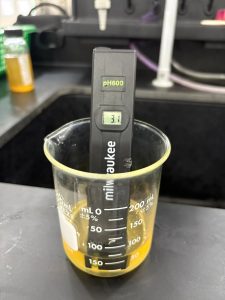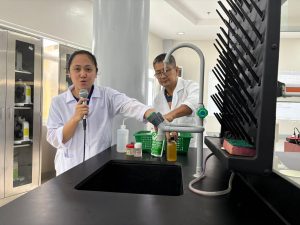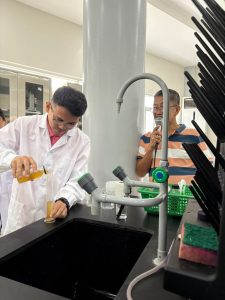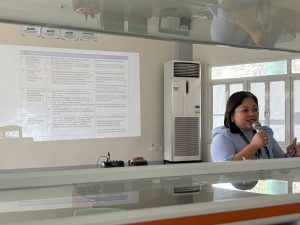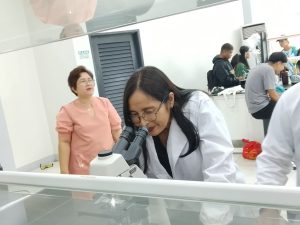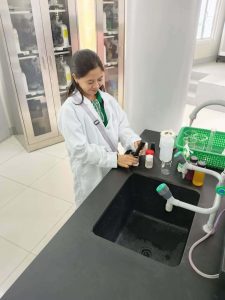

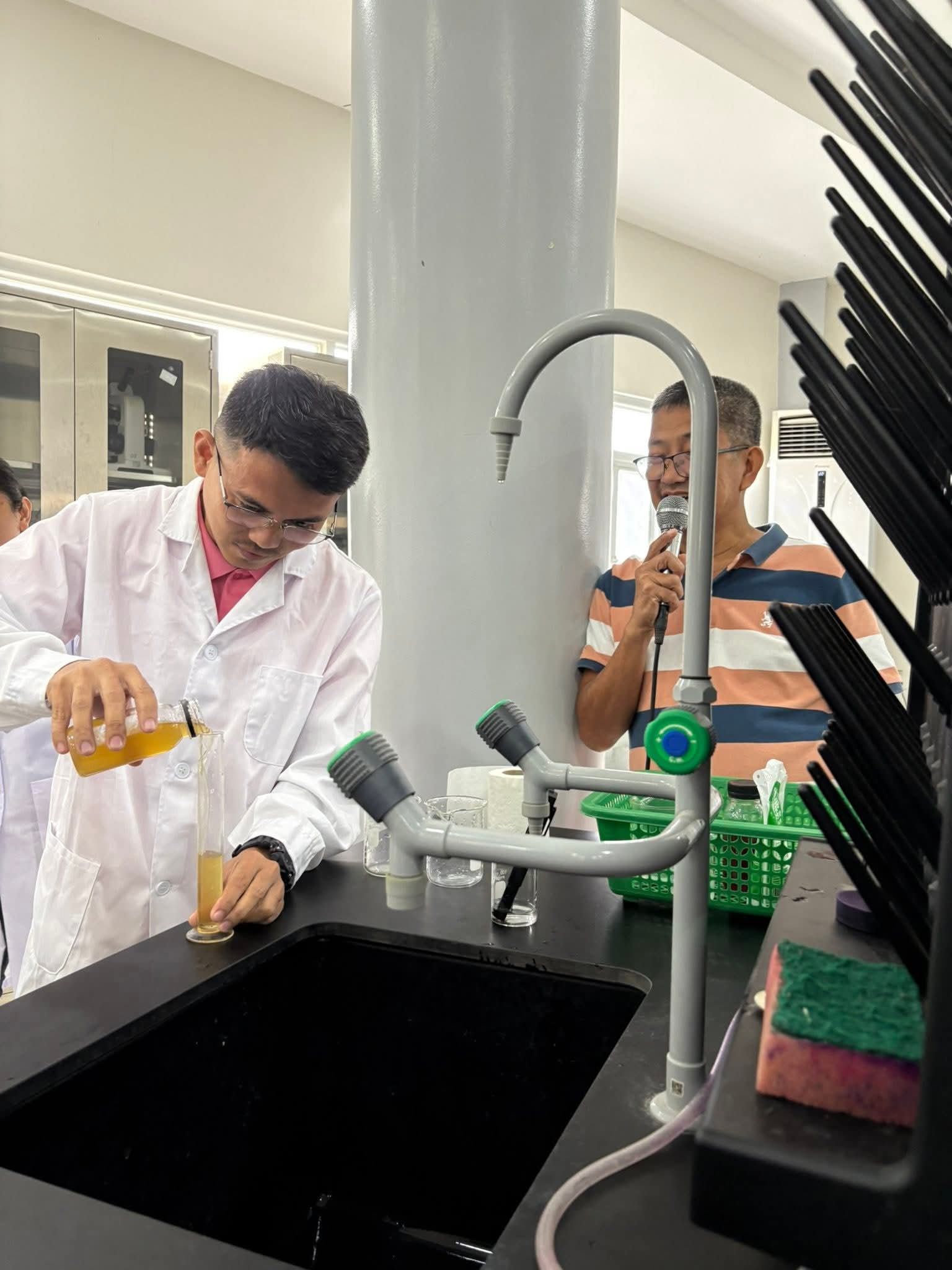
In line with its mandate to strengthen teacher education and extension services, the Central Bicol State University of Agriculture (CBSUA) Pili Campus, through its College of Development Education (CDE), conducted an extension training program titled “Bridging Theory to Practice: SOLO Taxonomy–Driven Lesson Planning for Science Education” on December 5, 2025.
The activity aimed to enhance the lesson planning competencies of secondary science teachers by integrating the Structure of Observed Learning Outcome (SOLO) Taxonomy in the design of learning objectives, activities, and assessments aligned with the Revised K to 10 Curriculum.
The training comprised two extension projects: the E.X.C.E.L. Training Program, which focused on exemplar-based lesson planning for Life Science, and the I.N.S.P.I.R.E. Educational Innovation Program, which emphasized Chemistry lesson planning using the SOLO Taxonomy framework.
The program was facilitated by faculty members from the CDE, Ludivico B. Homillano, EdD, and Myra Luz M. Homillano, PhD, who had previously served as writers of national learning materials for Grades 7, 9, and 10 under the Revised K to 10 Curriculum. Their expertise was developed through their participation in the project “Development of Learning Materials in Support of the Revised K to 10 Curriculum,” implemented by the Philippine Normal University–Research Institute for Teacher Quality (PNU-RITQ) in partnership with the Department of Education.
Participants included science teachers from Pili National High School, V. Bagasina Memorial High School, and Rodriguez National High School, which serve as CBSUA’s cooperating schools and active partners in teacher education, research, and extension initiatives.
A key output of the activity was the development of agri-contextualized science lesson plans aligned with national standards, which reflected the agricultural context of the region. The initiative supports CBSUA’s commitment to instructional excellence and contributes to the promotion of Quality Education under the United Nations Sustainable Development Goal 4 (SDG 4). | 𝘙𝘦𝘱𝘰𝘳𝘵 𝘢𝘯𝘥 𝘱𝘩𝘰𝘵𝘰𝘴 𝘧𝘳𝘰𝘮 𝘊𝘋𝘌