

CBSUA, PARTNERS SIGN MOA TO BOOST BICOL SOYBEAN VALUE CHAIN
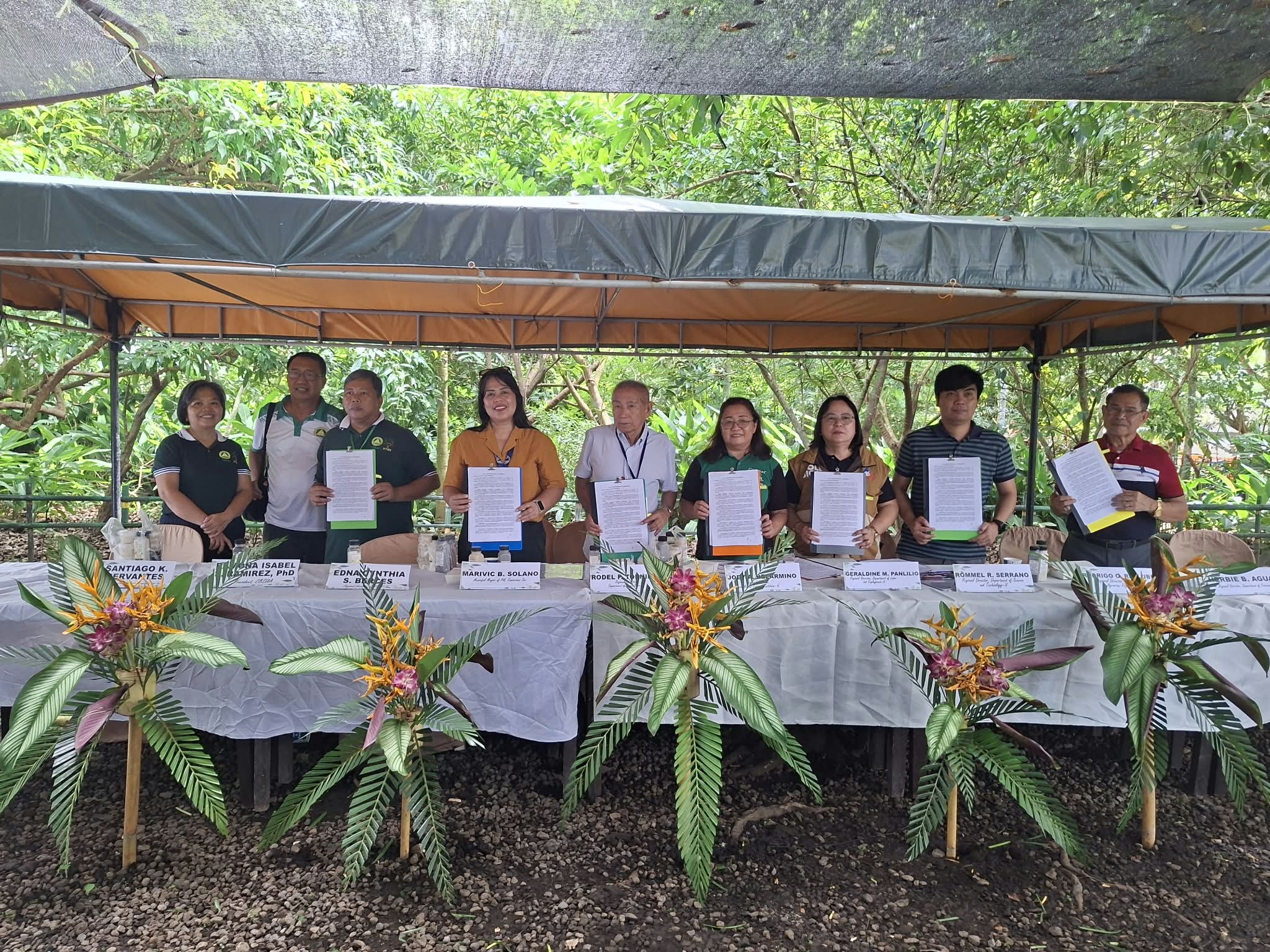
The Central Bicol State University of Agriculture (CBSUA) strengthened its partnership with Carmel Agri-Learning Farm Inc. and key regional line agencies to boost the Bicol soybean value chain, marked by the signing of a joint memorandum of agreement (MOA) on November 17, 2026, in Barangay Binanuaanan, Pili, Camarines Sur.
The partnership officially launches the pilot implementation of the “Inclusive and Sustainable Agriculture Value Chain System for Soybean,” a project designed to address the needs of local soybean farmers and enhance sustainable agricultural productivity across the region.
Representing CBSUA at the signing ceremony were Vice President for Administration and Finance Edmundo B. Casaul Jr., MBA, Pili Campus Administrator Assoc. Prof. Julieta M. Casaul, and members of the University Extension Services Division.
Carmel Agri-Learning Farm Inc. was represented by its owner and CEO, Santiago K. Cervantes, who also serves as president of the Bicol Organic Soybean Producers and Processors Association (BOSPPA). Also in attendance to express their support for the initiative were Department of Economy, Planning, and Development (DEPDev) Regional Director Edna Cynthia S. Berces and Pili Municipal Mayor Marivic B. Solano.
Representatives from the Agricultural Training Institute – Regional Training Center V (ATI-RTC V), Department of Agriculture – Regional Field Office V (DA-RFO V), Department of Labor and Employment (DOLE) – Regional Office V, Department of Science and Technology (DOST) – Regional Office V, and Department of Agrarian Reform – Regional Office V (DARRO V) also signed the MOA, pledging full support within their respective mandates to serve Bicolano farmers.
To strengthen the entire value chain, CBSUA will provide technical assistance to the program, including deploying instructors and conducting capacity-building activities on soybean crop production, processing, and marketing. The university will also assist in monitoring the program’s progress across all stages of implementation.
This initiative directly supports the United Nations Sustainable Development Goals (SDGs), particularly SDG 2 (Zero Hunger) by promoting sustainable agriculture and food security, SDG 8 (Decent Work and Economic Growth) by empowering local farmers and enhancing agribusiness value chains, and SDG 17 (Partnerships for the Goals) through strong multi-sectoral collaboration.